Earlier this year, we published an article that explored home ownership and what it costs to rent across key African cities and saw that only about 31% of residents in Lagos own their homes. This points to the fact that renting accounts for a larger share of the housing population in Lagos and raises an important question that our analysts have been thinking about: if so many Lagos residents rent, why aren’t large-scale developers building more homes specifically for the rental market? In this article, we will examine why developers favour the build-to-sell model and the factors driving Lagos residents to rent instead of buy their own homes.
Why are Developers building to sell when most Lagosians rent?
- High cost of capital and the need to recover investment quickly
One of the strongest reasons developers favour build-to-sell is that it provides a clear exit through which the developer can realise a gain, repay investors and redeploy capital. When capital is being financed through borrowing, the cost of capital continues to accumulate throughout the construction period.
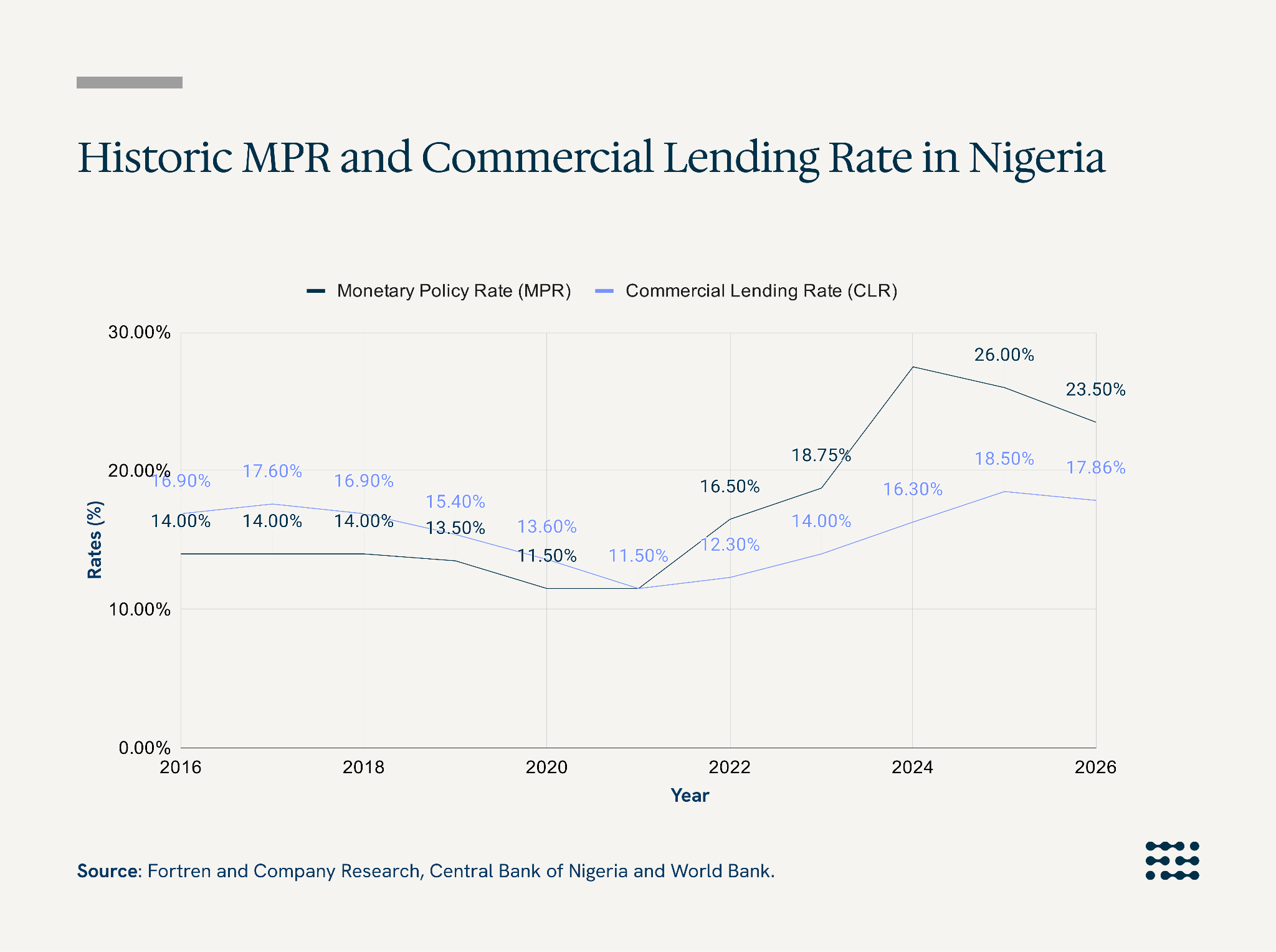
The Central Bank of Nigeria’s Monetary Policy Rate (MPR), which influences the wider cost of borrowing, rose from 11.5% in 2022 to 26.5% by 2024, now at 23.5%. Over the same period, the commercial lending rate shown in the accompanying chart increased from 11.5% in 2021 to 18.5% in 2025, which has slightly reduced to 17.86% in 2026. These trends illustrate the expensive financing environment in which developers have had to operate.
For a developer using expensive short-term finance, holding a completed building as a rental asset can extend the period before the initial investment is recovered. Rental income arrives gradually, typically within 8-15 years, while lenders and investors may expect repayment within 12 - 36 months post completion. Selling completed units offers a more immediate route to recovering the money invested.
- Selling transfers long-term operating risk to the buyer
A developer who retains a building must manage vacancies, collect rent, maintain common areas, repair building systems and respond to tenants' needs. The cost of these responsibilities can rise over time, particularly where power, water, security, lifts and other essential services require significant expenditure.
Selling units allows developers to transfer much of these responsibilities to buyers. Once the sale is completed and the property handed over, the developer can recover the investment without carrying the same long-term operational exposure.
- Construction and land costs have outrun achievable rents
A large rental market does not automatically make rental development profitable. The rent tenants can afford must be sufficient to support the cost of delivering and maintaining the property.
Developers face high costs of building materials due to currency fluctuation and inflationary pressures, which influence the minimum price at which a developer can break-even.
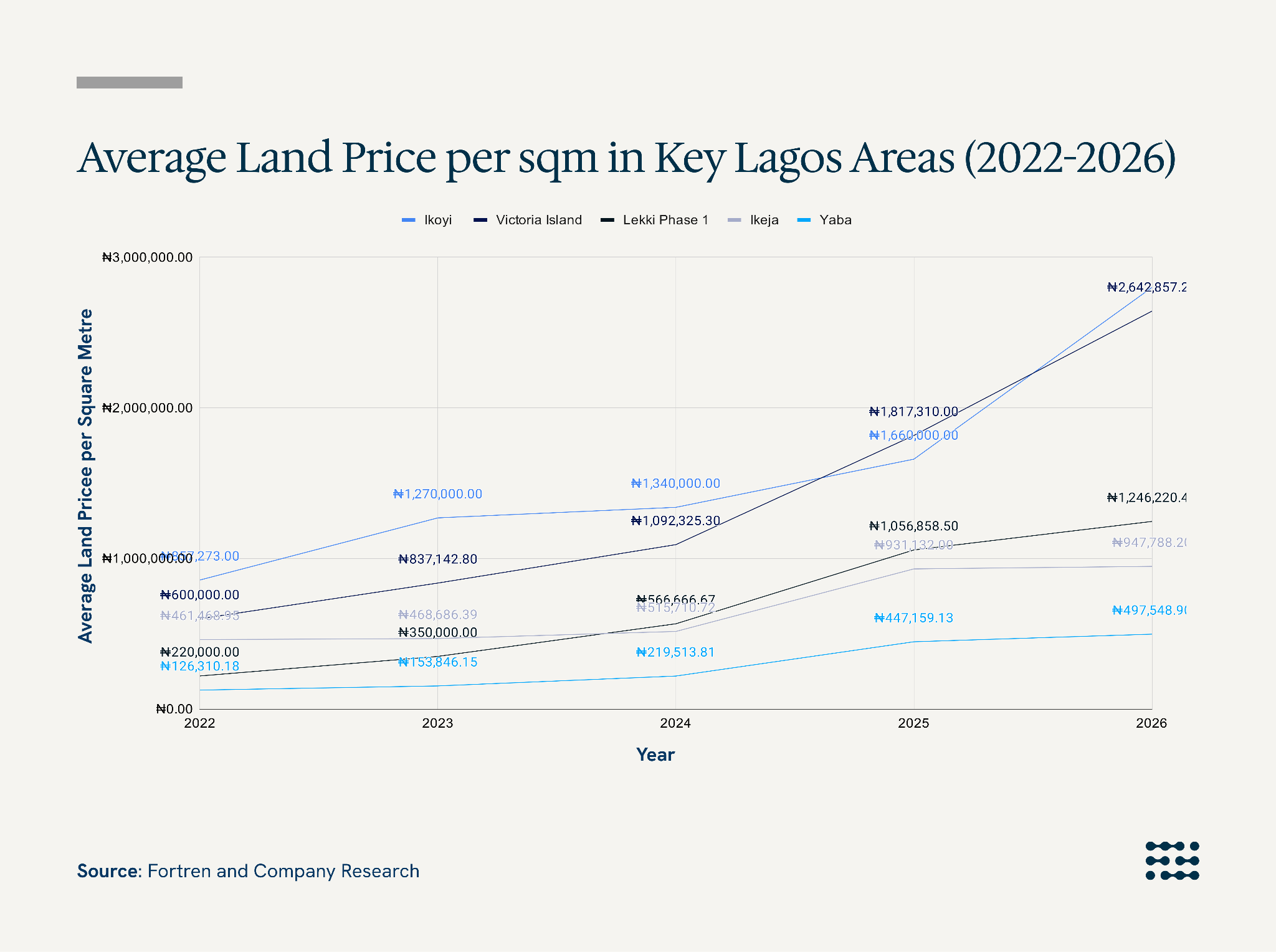
For land costs, Fortren and Company’s data show that between 2022 and 2026, average land prices per square metre in Ikoyi rose to ₦2.8 million, while Victoria Island reached ₦2.63 million. Prices also climbed to ₦1.25 million in Lekki Phase 1, ₦950,000 in Ikeja and ₦500,000 in Yaba. These increases raise the initial investment required to develop housing, putting additional pressure on the rents needed to generate viable returns.
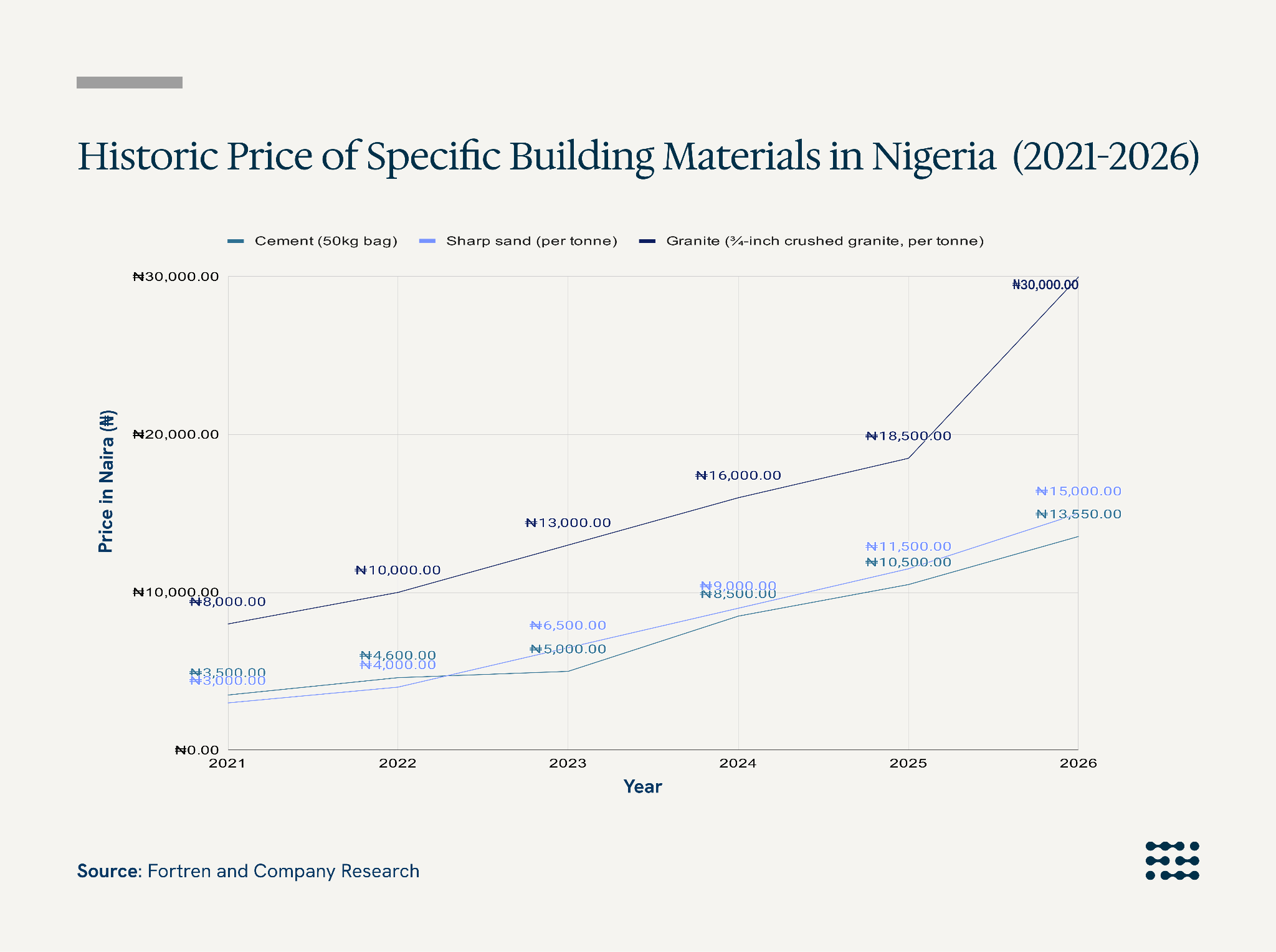
Data that we are tracking show that between 2021 and 2026, the price of a 50kg bag of cement rose from ₦3,500 to ₦13,550, an increase of approximately 287%. Over the same period, sharp sand increased from ₦3,000 to ₦15,000 per tonne, while ¾ inch granite rose from ₦8,000 to ₦30,000 per tonne. Such increases raise the cost of delivering new housing. Developers must also contend with higher labour, land, transportation and finance costs.
Due to these factors, developers may find that selling the completed units to buyers offer a better return than retaining them and collecting rent from households with more limited purchasing power.
- Off-plan pre-sales provide a route to financing construction
Off-plan sales allow developers to sell units before construction is completed, sometimes receiving deposits and staged payments that help fund the project. This can reduce the amount of external capital a developer needs to raise and provide evidence of buyer demand before committing to the full construction programme. It can also help developers manage exposure to construction and sales risks, depending on the terms of the agreements. Build-to-rent offers no equivalent cash inflow from the sale of each unit while the building is being developed.
Why do Lagos residents rent more than they buy units?
- Homeownership is unaffordable relative to income
For many Lagos residents, the challenge is not finding a home but earning enough to buy one. PiggyVest’s Savings Report 2025, published in March 2026, found that 28% of surveyed Nigerians had no income, while another 30% earned below ₦100,000 monthly. Although these are national findings, they highlight the financial constraints many households face.
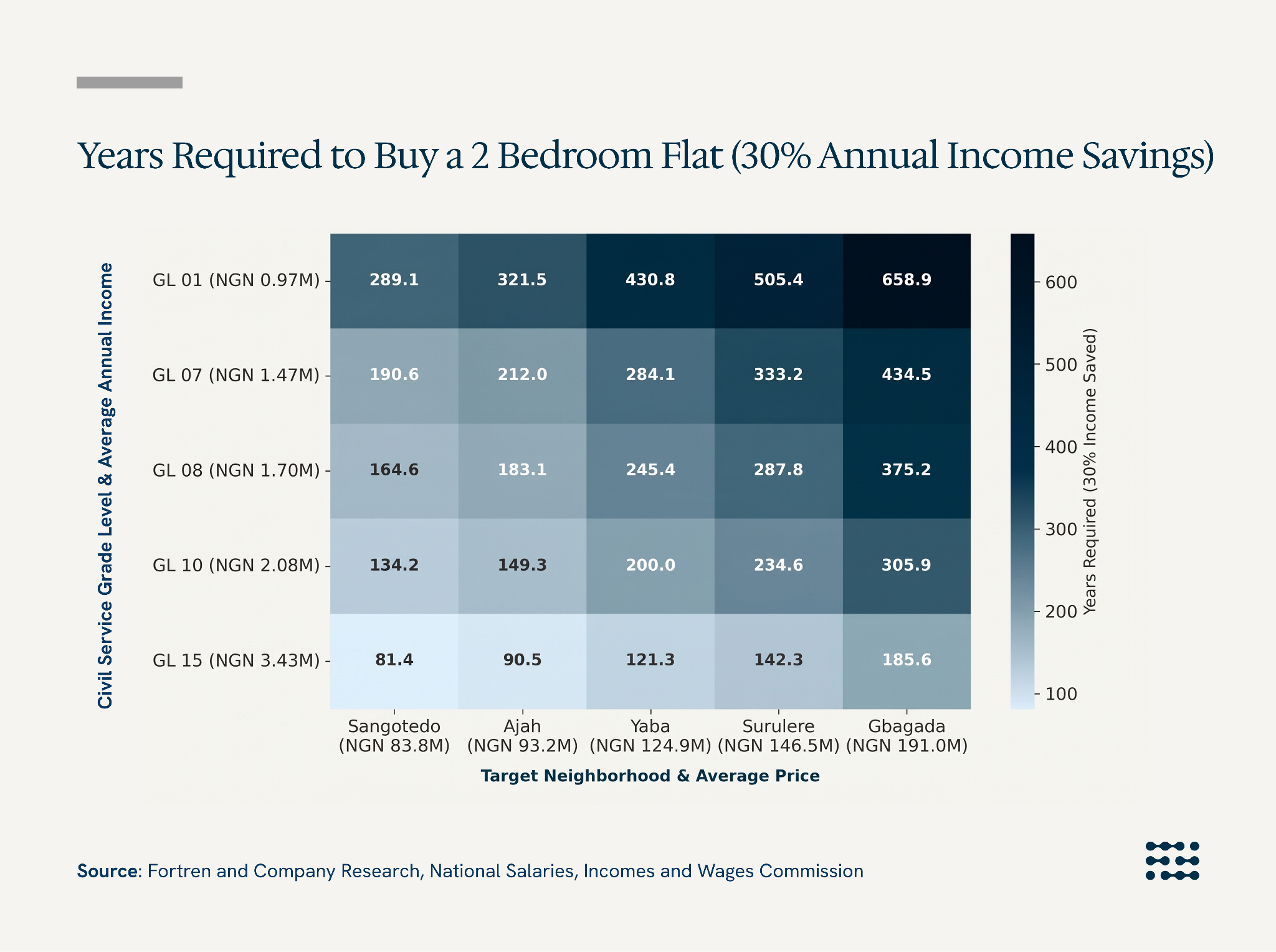
The gap between income and property prices is even clearer in Lagos. Based on the accompanying analysis by Fortren and Company, a civil servant in Level 1, according to National Salaries, Incomes and Wages Commission, earning an average of ₦970,000 annually would need to save 30% of their income for approximately 289 years to purchase a two-bedroom flat in Sangotedo, compared with 659 years in Gbagada, assuming prices remain unchanged.
These estimates illustrate why homeownership remains out of reach for many households. While renting provides immediate access to accommodation, purchasing requires substantial capital that many earners cannot accumulate, helping explain why demand for rental housing remains strong.
- Limited access to mortgage finance restricts the route to ownership
Mortgage finance can allow households to purchase homes by spreading repayment over several years. However, the availability, affordability and eligibility requirements of mortgage products influence how many households can use this route. People with irregular incomes or limited formal documentation may also struggle to qualify.
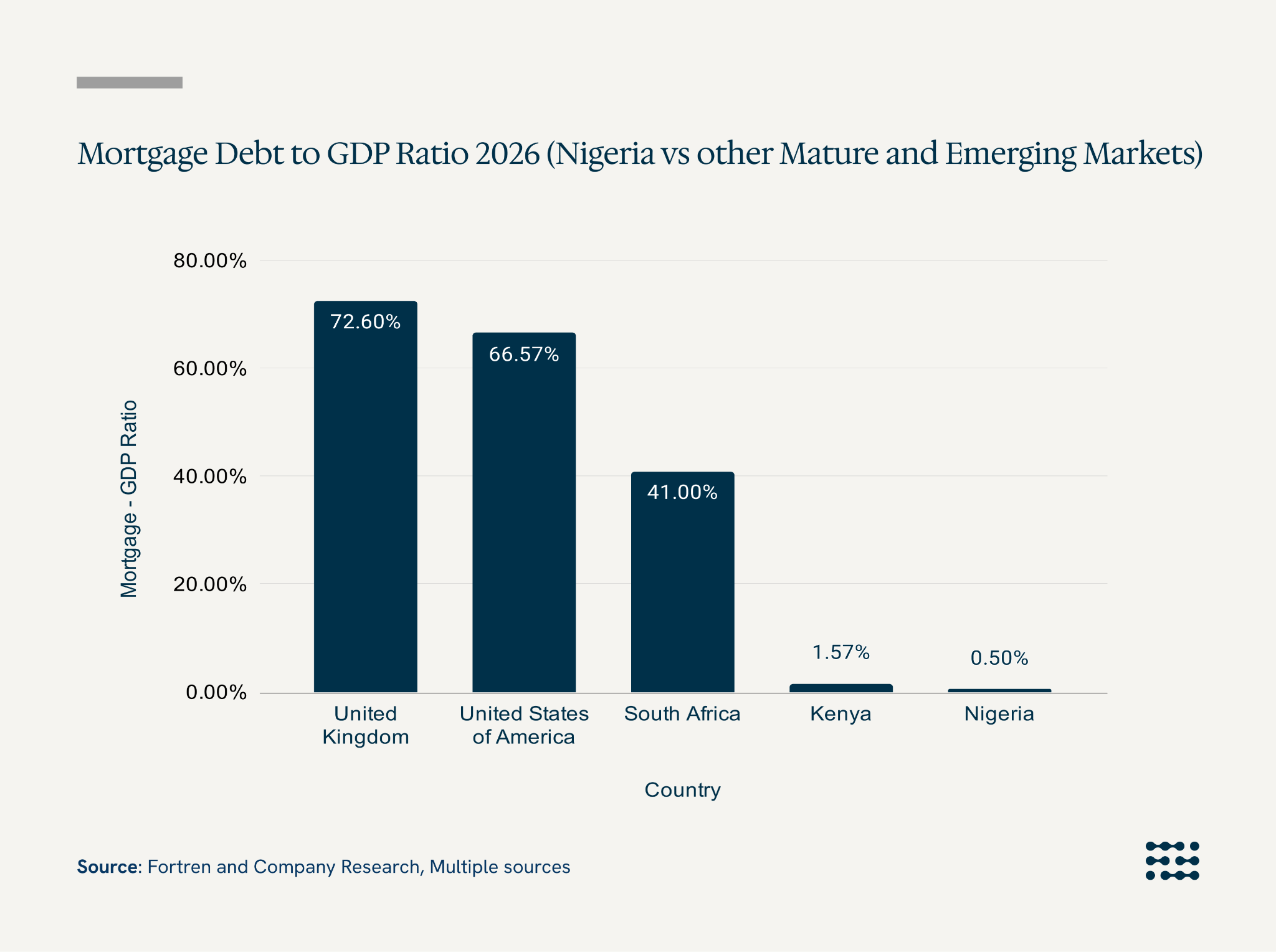
Nigeria’s mortgage market remains small relative to those of several other countries. The accompanying 2026 comparison puts Nigeria’s mortgage debt-to-GDP ratio at just 0.50%, compared with 1.57% in Kenya, 41% in South Africa, 66.57% in the United States and 72.60% in the United Kingdom. This illustrates the limited scale of mortgage lending in Nigeria relative to the size of its economy.
The result is that a household's ability to pay for accommodation does not equally translate into the ability to secure a mortgage as data show that over 60% of Nigerians are excluded from mortgage financing despite CBN’s benchmark policy rate reduction in interest rates from 26.5% to 23%.
- Income instability makes long-term ownership commitments difficult
Workers whose earnings fluctuate from month to month may find it difficult to accumulate a deposit or maintain regular mortgage repayments to own a home. Also, households with limited emergency savings are also more vulnerable to unexpected expenses, changes in employment or interruptions to income, automatically affecting home ownership commitments.
Conclusion
Lagos's rental market presents a compelling reason for developers to examine the build-to-rent model, but it does not mean that selling properties is inherently the wrong strategy. While outright sales offer an opportunity to recover capital quickly, build-to-rent developments could provide recurring income by serving as a more practical response to the city’s housing affordability challenge. The opportunity is to make rental housing commercially viable by matching the right capital with the right strategy.
We love your feedback. Let us know what you think about this article or what you think about what's driving the preference for “build to sell” by sending an email to advisory@fortrenandcompany.com.
You can also join the conversation here on LinkedIn. If you need bespoke research on any asset real estate class, send an email to our advisory team at advisory@fortrenandcompany.com.