What Dangote’s ₦550 million FUTO hostel pledge signals for Nigeria’s student housing market

Aliko Dangote has pledged ₦550 million to fund the construction of new student hostels at the Federal University of Technology, Owerri (FUTO), marking a significant private commitment to student housing in Nigeria.

Olapeju Aderemi
April 28, 2026
·
5 mins read
Share

Aliko Dangote has pledged ₦550 million to fund the construction of new student hostels at the Federal University of Technology, Owerri (FUTO), marking a significant private commitment to student housing in Nigeria.

The announcement was made on Monday, April 27, 2026, during FUTO’s 37th Public Lecture themed “Enterprise, Leadership and Service to Humanity.” The hostel development is expected to expand on-campus accommodation capacity, ease pressure on existing facilities, and improve overall student living conditions. Beyond its immediate impact, the pledge raises a deeper structural question: can philanthropy realistically close Nigeria’s student housing gap, or is it only a band-aid solution?

Chronic underinvestment in student housing has pushed students into a fragmented, high-cost informal market.

With over 2.1 million students enrolled across universities, polytechnics, and colleges of education, Nigeria has the largest tertiary student population in Sub-Saharan Africa. Yet existing infrastructure remains severely constrained. Only 8.9% of students have access to on-campus accommodation, leaving the vast majority to rely on off-campus housing.

This gap reflects decades of structural underinvestment in student housing. In response, a fragmented informal rental market has emerged, pushing students into higher-cost off-campus housing with inconsistent quality and limited regulatory oversight. The consequences are significant: increased financial pressure, compromised safety, and a gradual erosion of the residential experience that underpins quality tertiary education.

Nigeria lags peer markets as Africa’s student housing gap continues to widen

Across Africa, the student housing gap is widening. Nigeria’s 8.9% accommodation rate remains among the lowest on the continent. In Kenya, approximately 22% of students have access to formal student housing, while South Africa, home to Africa’s most developed private student housing market, still faces a shortfall of over 500,000 beds against a combined university and TVET enrollment of about 1.7 million.

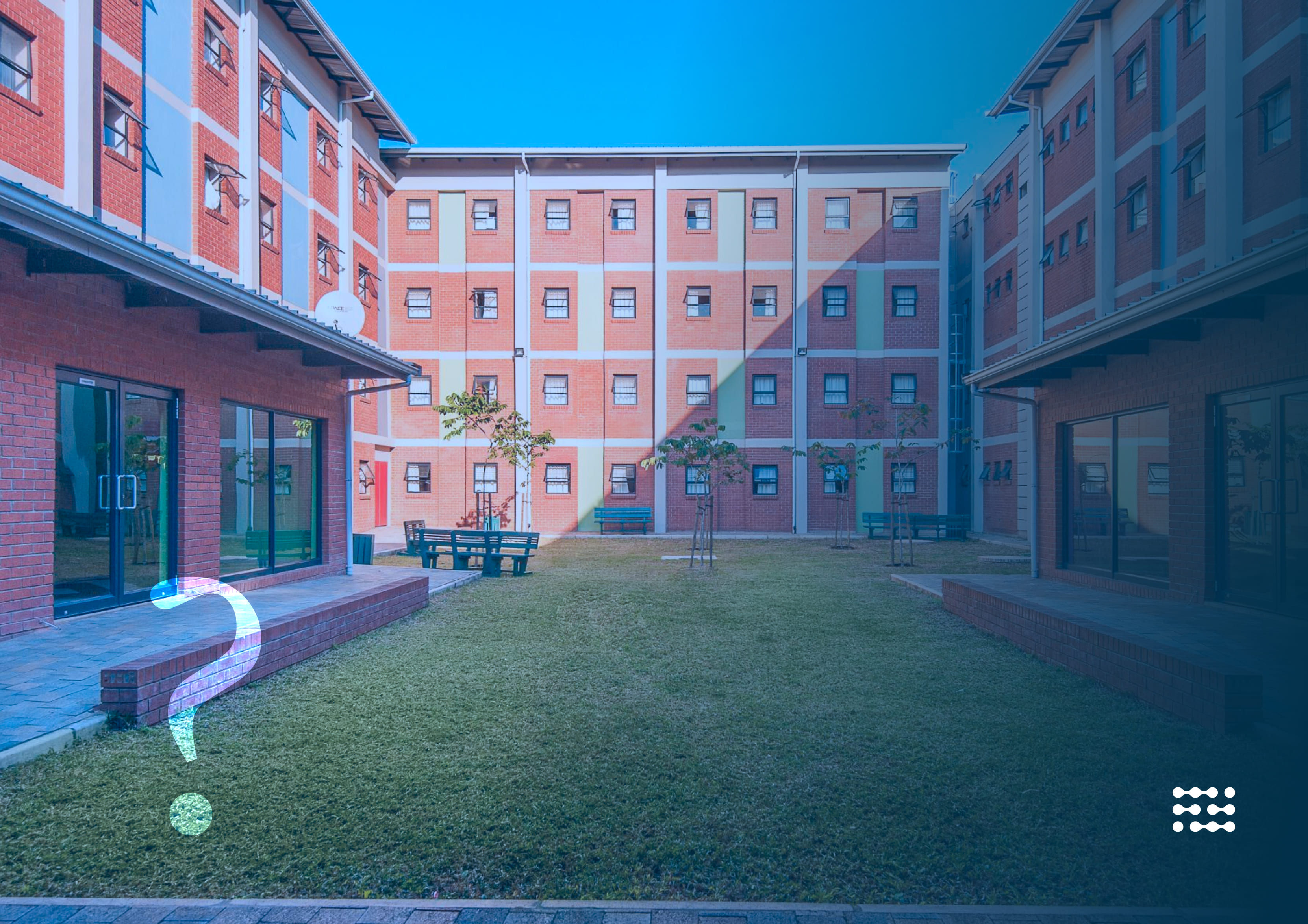
Aliko Dangote has pledged ₦550 million to fund the construction of new student hostels at the Federal University of Technology, Owerri (FUTO)

Philanthropy can catalyse impact, but cannot close the gap at scale

Dangote’s ₦550 million hostel pledge is both significant and timely. It delivers immediate capacity, signals private sector leadership, and reinforces the strategic relevance of student housing as an emerging asset class in Nigeria. However, the scale of the deficit makes one point clear: the gap cannot be closed by philanthropy alone.

Closing Nigeria’s student housing gap requires institutional capital, deployed systematically, at scale, and with a long-term investment horizon. Yet private capital has been slow to enter the market at the required scale, not due to weak demand, but because of a structural misalignment between development costs and achievable rental yields. The economics of student housing in Nigeria, particularly outside Tier 1 cities such as Lagos and Abuja, often fail to meet institutional return thresholds.

Unlocking the market requires new models, partnerships, and policy support

Bridging this cost–revenue mismatch is critical. It will require new delivery models, pricing innovation, public-private partnerships, and policy support that improves the risk-return profile of purpose-built student accommodation as an asset class.

This is the inflection point. Philanthropy can catalyse attention and deliver targeted impact, but only institutional capital, enabled by the right structures, can provide the scale required to close the gap.

Read our deep dive on why private capital remains underpenetrated in Africa’s student housing market.

About us:
Fortren & Company is an independent real estate market research and advisory firm focused exclusively on African markets. We provide institutional clients with the market intelligence they need to make informed decisions. If you have feedback on this article, or require bespoke research on student housing or other asset classes, contact advisory@fortrenandcompany.com.

With just 3,577square meters in land mass, Lagos is home to over 17 million residents, making it one of the most densely populated cities in the world. One of the most pronounced effects of clear overpopulation in overcrowded cities like Lagos is the increase in informal settlements, land grabbing, and illegal construction. Internal data from the Lagos State government shows that more than 349 buildings have been erected illegally and do not comply with the planning laws set out by the state. In response, the Lagos State Building Control Agency (LASBCA) and the Ministry of Physical Planning and Urban Development have intensified enforcement of planning laws to ensure that buildings within Lagos State are designed, constructed, and maintained to a high standard of safety. Their enforcement efforts have led to numerous building demolitions and are primarily targeted at three recurring violations across the state, which we will be discussing below.

  1. Lack of building development permit:
  1. sdfds

Failure to obtain required development permits remains one of the most common triggers for demolition across Lagos. Under Section 27(1) of the Lagos State Urban and Regional Planning and Development Law, no building is allowed to be erected across the state, except when necessary permits and approvals have been duly sought and obtained.

“No person shall carry out any development in Lagos State without obtaining a permit from the relevant planning authority.”

Non-compliance with section 27(1) of the Lagos State Urban and Regional Planning and Development Law authorises the state government to demolish any building that has not sought and obtained the necessary approvals. Despite this clear guideline, unauthorised construction continues to proliferate in the state. In a recent enforcement action, 13 illegal buildingswere demolished in Lagos for non-compliance, highlighting the Government’s resolve to clamp down on developments that violate planning regulations. Several factors may explain why some developers bypass the approval process, including a lack of awareness of regulatory requirements, the perceived complexity or delay in obtaining permits, and, in some cases, a calculated risk to evade official fees or oversight. While these issues don’t justify non-compliance, they underscore the need for continued public education, transparency, and reform of the permitting process.

  1. Encroachment on Drainage Channels and Setbacks:

Building on drainage channels and designated setbacks stands out as one of the leading causes of demolition across Lagos. This issue not only breaches planning regulations but has also contributed to environmental and public safety risks.The Lagos State Building Control Agency(LASBCA) mandates a minimum setback of nine (9) meters for residential buildings in high-density, flood-prone zonessuch as Victoria Island, Apapa, and the Lekki Peninsula Schemes I and II. Despite these regulations, many developers have reclaimed and erected structures directly on waterways, obstructing water flow and increasing the risk of flooding. Recently, the Lagos state government marked 39 buildingsfor demolition in the Eti-Osa Local Government Area (mostly along the Ikota corridor) for obstructing drainage channels and encroaching.Similar actions have been taken in other areas like Amuwo Odofin. These demolitions have left many homeowners devastated. In response, affected owners have petitioned the government through their community associations, while others seek court injunctions to challenge the demolition or delay it pending clarification of their land status.

Urban experts, however, emphasise the need for property buyers to secure proper planning permits from the Lagos StatePhysical Planning Permit Authority(LASPPPA) before embarking on any building or development project within the state.In many cases, properties built on canals, drainage channels, or government-designated right-of-way have little to no legal standing, making it difficult for affected owners to obtain compensation or favourable rulings in court. This is because such developments typically contravene established planning laws and are considered public safety hazards.
We love your feedback. Let us know what you think about this article or your experience renting in Africa by sending an email toadvisory@fortrenandcompany.com. You can also join the conversation here onLinkedIn.

Similar Insights

Read our thoughts on related topics that might interest you

See all insights